You graduated with six figures of debt. Your income finally matches your training. But your interest rate still reflects the risk profile of a student, not a practicing professional.
That’s the structural problem with federal loans for medical professionals.
The average medical school graduate owes $246,659 including undergraduate debt. Dentists graduate with around $293,000 to $335,000. The current federal grad PLUS loan rate sits at 8.94%.
The Interest Rate Arbitrage You’re Missing
If you borrowed $200,000 at 8.94% and pay it over 10 years, you’ll ultimately pay $303,242. Interest represents 34% of that total.
Refinance that same balance to 6%, and you save $5,900 in interest in the first year alone. That’s $5,900 that goes toward principal instead of disappearing into interest payments.
The time compression matters too. The same monthly payment that clears an 8.94% loan in 10 years pays off a 6% loan in about 8 years.
This isn’t about financial literacy. It’s about accessing tools that reflect your actual risk profile.
Why Lenders Want You
Doctors report average pretax income of $323,693 while carrying average debt of $188,317. Nurses earn around $80,695 with $40,611 in debt.
Your income stability makes you a lower-risk borrower. Lenders know this. That’s why refinancing rates for medical professionals beat federal rates by significant margins.
Your debt-to-income ratio looks heavy on paper. But lenders understand that your earning trajectory differs from most borrowers.
The market recognizes what federal loan rates don’t: your debt is temporary, your income isn’t.
What You Trade When You Refinance
Refinancing moves your loans from federal to private. You lose access to:
- Income-driven repayment plans
- Public Service Loan Forgiveness eligibility
- Federal forbearance and deferment options
If you’re pursuing PSLF or your income is uncertain, refinancing doesn’t make sense. Federal protections have value.
But if you’re in private practice, established in your specialty, and planning to pay your loans off within 10 years, then the federal protections would not pertain to you.
The Decision Compresses to One Question
Are you keeping federal loans because you need the protections, or because comparing refinancing options feels too complex?
If it’s the second reason, that’s a structural problem you can solve.
Your debt doesn’t need to equal more than half your annual salary for the next decade. The tools exist to compress that timeline. You just need to see the options side by side without the friction.
Transparency isn’t about understanding every detail of loan amortization schedules. It’s about seeing what your monthly payment actually buys you at different rates.
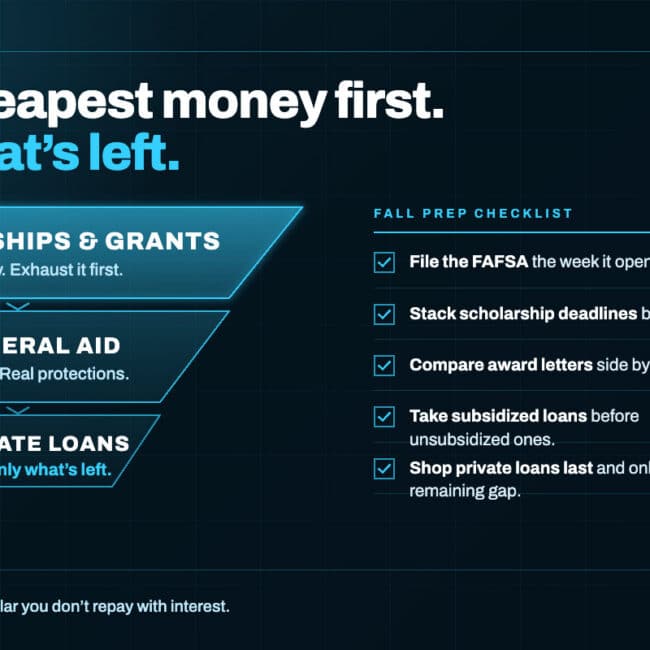
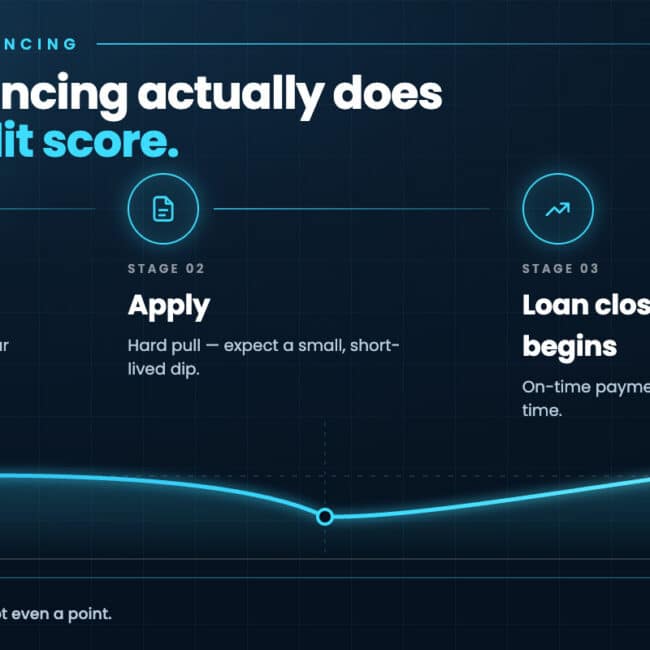
The infrastructure to compare rates across lenders without affecting your credit score exists now. Soft credit pulls let you see personalized rates before committing to anything. Check your rate on Admire to see what you qualify for in minutes.
You spent years training to make high-stakes decisions with incomplete information. Your student loans shouldn’t require the same skill set.
Keep Reading
Related Reading
- How Admire’s Soft Credit Checks Protect Your Credit Score
- Total Loan Cost: The Real Metric That Matters for Borrowers
- How to Use Soft Credit Checks to Compare Student Loans (Without Hurting Your Score)
- PSLF vs. Refinancing: The $200K Decision Most Professionals Get Wrong
- Your Employer Might Match Your Student Loan Payments. Most Borrowers Have No Idea.
Compare Your Options
Ready to see what rates you qualify for? Admire.org lets you compare real rates from 20+ lenders with a soft credit check — no impact to your credit score.
- Compare Student Loan Refinance Rates — See real refinance rates from 20+ lenders with no credit impact
- View Current Refinance Rates — Side-by-side rate comparison updated daily
- Read Our Lender Reviews — Honest reviews of SoFi, Earnest, ELFI, and more