The short answer: most student loan refinancing lenders require a credit score of at least 650 to 700, though the exact threshold varies by lender. A score of 720 or higher typically qualifies you for the most competitive rates.
But credit score alone doesn’t tell the full story. Here’s what lenders actually look at when you apply to refinance — and how to find out what you qualify for without any risk to your score.
Minimum Credit Scores by Lender Type
There’s no single industry-wide minimum. Each lender sets its own criteria:
- Most mainstream lenders (SoFi, Earnest, College Ave): typically 650–680 minimum
- Credit unions and smaller lenders (ISL, Brazos, INvestEd): sometimes more flexible on score but may have geographic or membership requirements
- Premium-rate lenders: a 720+ score generally unlocks the lowest advertised rates
You can see how individual lenders compare in our lender reviews, which break down eligibility criteria for each company.
What Else Matters Besides Credit Score
Your credit score gets you in the door, but lenders weigh several other factors:
- Income and employment: Stable employment and sufficient income to cover payments is required. Most lenders want to see a debt-to-income ratio below 50%.
- Debt-to-income ratio (DTI): This measures your total monthly debt payments against your gross monthly income. Lower is better.
- Degree completion: Most refinancing lenders require a completed degree (associate’s or higher).
- Loan amount: Minimum loan amounts typically start at $5,000–$10,000 depending on the lender.
- Payment history: A track record of on-time payments on your existing loans signals reliability.
How to Check Without Hurting Your Score
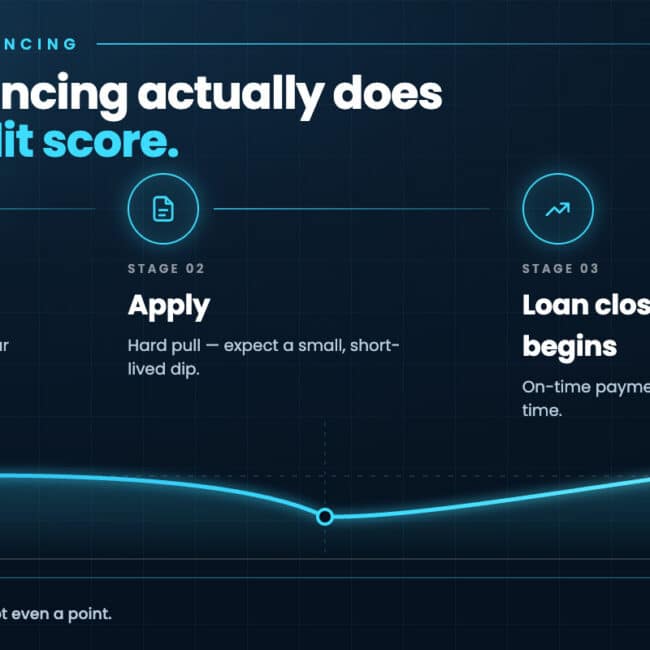
This is the part most people don’t realize: you can check your refinancing rates without any impact on your credit score. Admire.org uses soft credit checks to pull prequalified rates from 20+ lenders at once. A soft check shows lenders your credit profile without triggering a hard inquiry — your score stays exactly where it is.
A hard inquiry only happens later, if you choose a specific lender and formally apply. Even then, the impact is usually just 5–10 points and temporary.
What If Your Score Isn’t There Yet?
If your credit score is below 650, refinancing isn’t off the table — but you’ll want to take a few steps first:
- Check for errors: Review your credit report at AnnualCreditReport.com. Disputes on incorrect items can boost your score quickly.
- Pay down credit card balances: Your credit utilization ratio (how much of your available credit you’re using) is the fastest lever to move your score.
- Avoid opening new accounts: Each new application creates a hard inquiry. Space them out.
- Consider a co-signer: Some lenders allow a co-signer with stronger credit, which can improve your approval odds and rate.
Bottom Line
A credit score of 670+ puts you in the running with most refinancing lenders. A score of 720+ opens the door to the best rates available. But the only way to know what you’d actually qualify for is to check — and with a soft credit pull, there’s no reason not to.
Compare your refinancing rates on Admire.org — it takes about two minutes, and your credit score won’t be affected.