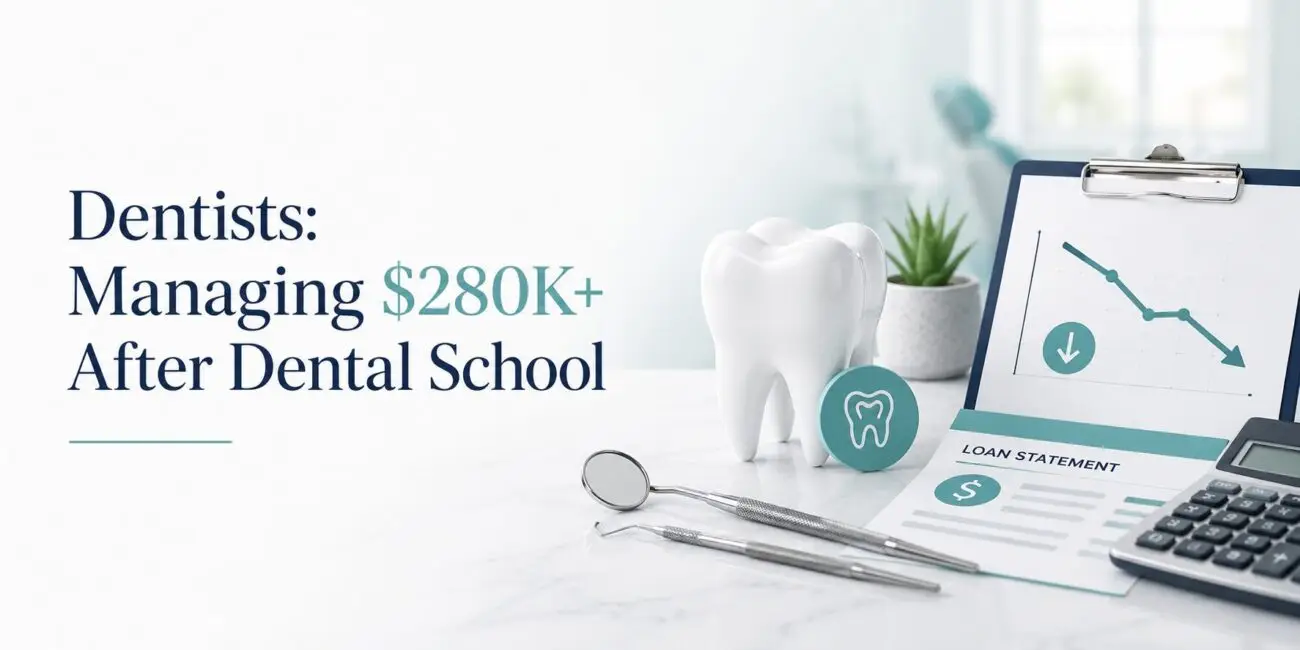
Dental school graduates face one of the largest student loan burdens in higher education. According to the Education Data Initiative, dental school borrowers who graduated in 2025 owed an average of $280,300 in dental school debt alone, with total education debt averaging approximately $298,000 when undergraduate borrowing is included.
At the same time, dentists earn strong incomes — the Bureau of Labor Statistics reports a median annual salary of approximately $170,000 for general dentists, with specialists earning significantly more. That high-income, high-debt profile makes dentists some of the strongest candidates for student loan refinancing.
The Scale of Dental School Debt
Understanding the scope of dental school costs helps frame why refinancing matters:
- Average annual tuition at public dental schools: approximately $46,900 for in-state residents (AY 2024-25)
- Average annual tuition at private dental schools: approximately $87,100 (AY 2024-25)
- 79% of dental school graduates take out loans specifically for dental school
- 76% of 2025 dental school graduates with debt used federal Grad PLUS loans, which carry higher interest rates than Direct Unsubsidized loans
Because so many dental graduates rely on Grad PLUS loans — which had an interest rate of 8.94% for the 2025-2026 academic year — the potential impact of refinancing to a lower rate is significant.
How Refinancing Changes the Picture for Dentists
Here’s a hypothetical look at how refinancing could affect a dental school graduate’s repayment:
| Scenario | Monthly Payment | Total Interest Paid |
|---|---|---|
| Current: $280K at 8.0%, 10-year term | ~$3,398 | ~$127,700 |
| Refinanced: $280K at 5.0%, 10-year term | ~$2,970 | ~$76,300 |
| Potential difference | ~$428/month | ~$51,400 less interest |
These are hypothetical examples for illustration only. Your actual rate and savings depend on your creditworthiness, loan balance, and the terms you qualify for.
Dentist-Specific Refinancing Considerations
Associate vs. Practice Owner
Your career stage matters when timing a refinancing decision:
- Associate dentists earning a stable salary are straightforward refinancing candidates. Lenders like predictable W-2 income.
- Practice owners may face additional scrutiny. If you’re taking on a practice acquisition loan alongside your student debt, lenders will look at your total debt-to-income ratio. However, if your practice is established and generating consistent revenue, you remain a strong candidate.
- New graduates building their patient base may benefit from a longer repayment term initially, then refinancing again once income stabilizes.
Specialty Training Adds Time and Debt
Orthodontists, oral surgeons, periodontists, and other specialists may spend 2-6 additional years in residency programs. During this period, interest continues to accrue on existing loans. Refinancing before or immediately after specialty training can help limit the compounding effect — read more about managing debt during training.
High Balances Need the Right Lender
Not every lender accommodates balances above $200,000. When comparing options, look for lenders that work with high-balance borrowers — several lenders on Admire.org accept refinancing balances well above $300,000, and some accommodate $500,000 or more for qualifying applicants.
What to Compare When Shopping for Rates
At debt levels of $280,000+, even small differences in terms matter significantly:
- Interest rate: A half-percentage-point difference on $280,000 translates to thousands of dollars over the life of the loan.
- Term length: Terms from 5 to 20 years are common. For dentists managing both student loans and practice costs, a 15-year term may balance payment size with total interest.
- Total loan cost: Look beyond the monthly payment — total loan cost is the number that actually matters when comparing offers.
- Forbearance options: Especially important if you’re early in your career or transitioning between roles.
Getting Started
- Inventory your loans: List every loan — federal and private — along with the balance, rate, and servicer. Many dentists have a mix of Stafford, Grad PLUS, and possibly HPSL loans.
- Check your credit: Most lenders look for a credit score of 680+ for refinancing, with the best rates available at 720 and above.
- Compare offers in one place: Admire.org lets you see personalized rates from multiple lenders through a single soft credit inquiry — no impact to your credit score.
- Consider timing: If you’re completing residency or starting a new position, your improving income picture may qualify you for a better rate than you expect.
Frequently Asked Questions
Can I refinance if I’m still in a dental residency?
Some lenders offer refinancing during residency, often with modified payment options during training. Once you transition to a full-income role, you can refinance again to take advantage of your higher earning power.
Should I refinance all my loans or just some?
You can refinance federal and private loans together or selectively refinance only certain loans. If you’re weighing federal benefits against rate savings, consider the tradeoff carefully — especially if PSLF applies to your situation.
What if I plan to buy a dental practice soon?
Refinancing your student loans at a lower rate can actually improve your debt-to-income ratio, which may help when applying for a practice acquisition loan. Consult with a financial advisor about timing.
Disclaimer: This article is for informational purposes only and does not constitute financial advice. Rates, terms, and eligibility requirements are subject to change. Refinancing federal student loans with a private lender means losing access to federal benefits such as income-driven repayment, forgiveness programs, and deferment options. Individual results vary based on creditworthiness, loan balance, and lender criteria. Always review the full terms before making a decision.