In most cases, no — you cannot refinance student loans while you’re still enrolled as a student. The majority of refinancing lenders require a completed degree and proof of income before they’ll consider an application. But there are nuances worth understanding, especially if you’re in graduate school or working while finishing your degree.
Why Most Lenders Require Degree Completion
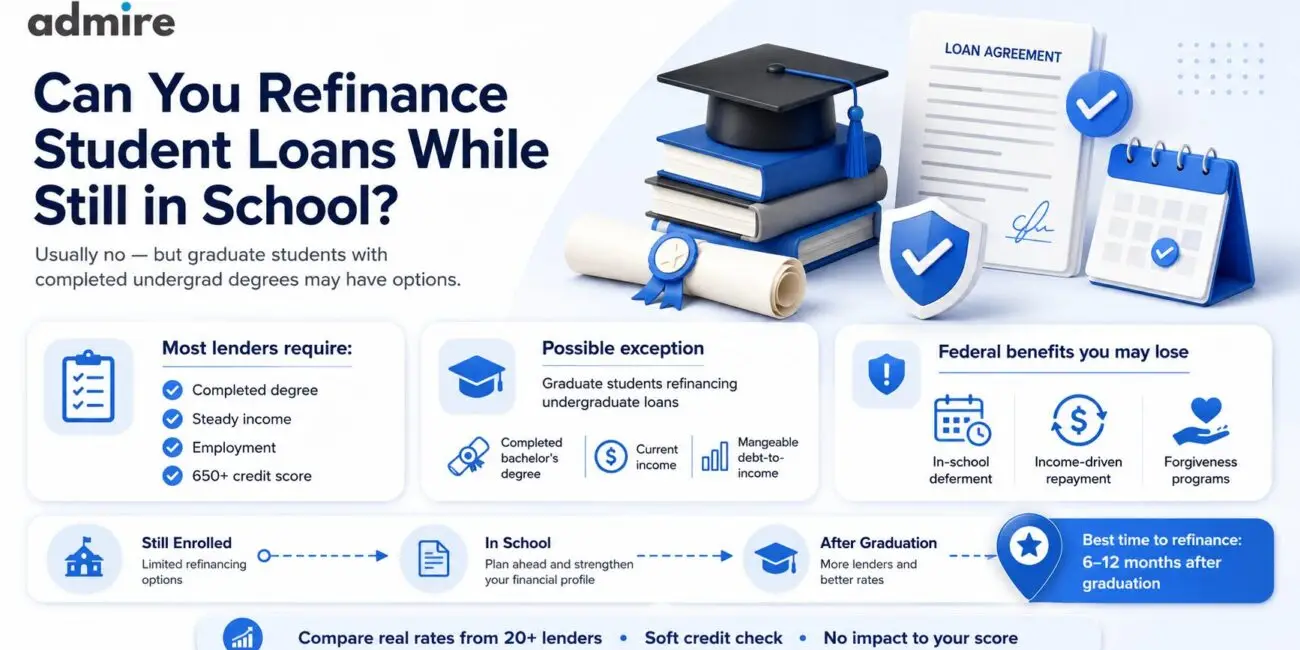
Refinancing is fundamentally different from your original student loan. When a lender refinances your debt, they’re issuing a brand-new private loan to pay off your existing ones. That means they need confidence you can repay — which typically requires:
- A completed degree (associate’s, bachelor’s, or higher)
- Steady employment or a signed offer letter
- Sufficient income relative to your debt
- A credit score of 650 or higher
Current students generally don’t meet these criteria because they lack the income history lenders want to see.
The Exception: Graduate Students with Undergraduate Debt
Here’s where it gets interesting. If you’ve already completed your undergraduate degree and are now in graduate school, you may be able to refinance your undergraduate student loans — especially if you’re working part-time or full-time while pursuing your advanced degree.
Some lenders will consider applications from graduate students who can demonstrate:
- A completed bachelor’s degree
- Current employment income (even part-time)
- A manageable debt-to-income ratio
This won’t work at every lender, but it’s worth checking. Admire’s comparison tool uses soft credit checks, so you can see which lenders would work with your profile without any impact on your credit.
What You Lose by Refinancing Federal Loans
Even if you qualify, refinancing federal student loans while in school means giving up some important protections:
- In-school deferment: Federal loans can be deferred while you’re enrolled at least half-time. Private refinanced loans typically cannot.
- Income-driven repayment plans: Federal IDR plans cap your payment based on income. Refinanced loans are private and don’t qualify.
- Loan forgiveness programs: Public Service Loan Forgiveness (PSLF) and other federal forgiveness programs only apply to federal loans.
If you’re planning to use any of these benefits, refinancing right now probably isn’t the right move.
Better Options While You’re Still Enrolled
If refinancing isn’t available or advisable right now, here’s what you can do instead:
- Make interest-only payments on your existing loans to prevent your balance from growing
- Build your credit score so you qualify for better rates when you do refinance after graduation
- Research lenders now — use Admire’s lender reviews to understand which lenders fit your profile so you’re ready to move quickly after graduation
- Compare private student loan rates if you need additional funding for your current program
When to Refinance After Graduation
Most borrowers find the sweet spot for refinancing is 6–12 months after graduation, once they have:
- A stable income
- A few months of on-time loan payments on record
- A clear picture of their total debt and monthly budget
When you’re ready, compare refinancing rates on Admire.org — it takes just a few minutes, uses a soft credit check, and shows you real rates from 20+ lenders.